DUS Auto Parts DUS Auto Parts

7 Tire Maintenance Tips to Improve Fuel Efficiency

Time:2026-09-24 Author:Amelia
0%

Fuel efficiency does not begin at the gas pump. It begins where rubber meets the road. Tire condition, pressure, alignment, and tread depth can quietly influence how hard your engine works. Even a small pressure loss may increase rolling resistance and fuel consumption. The change feels minor. The cost is not always minor.

This guide explores How Tire Maintenance Supports Fuel Efficiency through seven practical maintenance tips. According to Dan Zielinski, senior vice president of public affairs at the U.S. Tire Manufacturers Association, “Proper tire inflation is one of the easiest ways to improve fuel economy.” His point is simple, but many drivers still check pressure only before long trips. That habit deserves reconsideration.

A cold morning inspection can reveal useful details. Look for uneven tread wear, visible damage, or a tire that appears softer than the others. Use a reliable gauge, then compare the reading with the vehicle manufacturer’s recommended pressure. Do not rely on the number molded into the tire’s sidewall; it often shows maximum pressure, not the correct operating level.

Maintenance cannot eliminate every fuel-efficiency problem. Traffic, weather, cargo, and driving style still matter. However, properly maintained tires reduce avoidable resistance and support safer handling. These recommendations combine manufacturer guidance, tire-industry expertise, and everyday driving experience. They are practical, not magical. Consistency matters more than perfection.
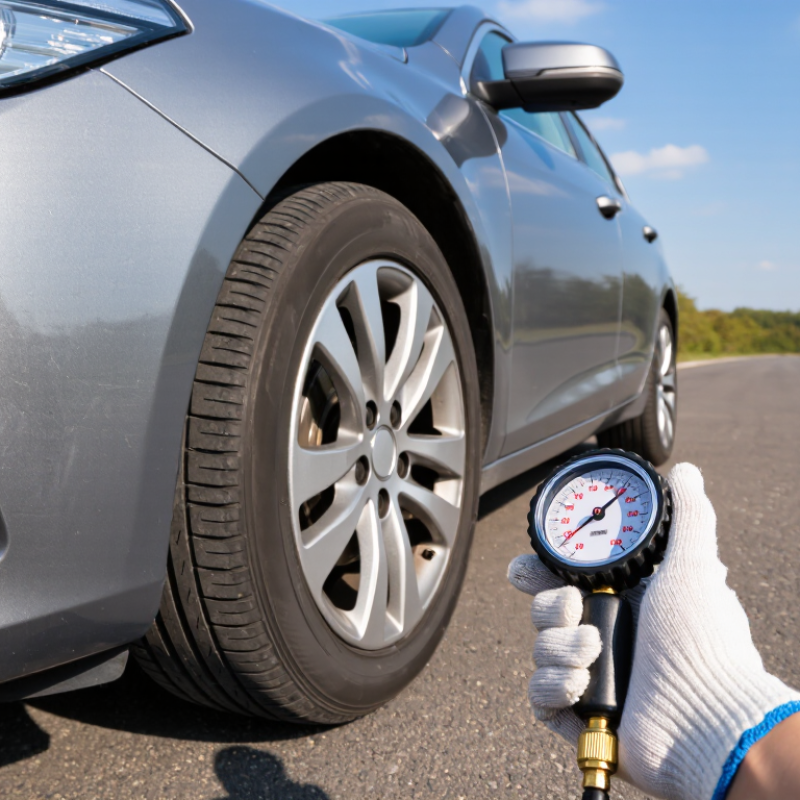
7 Tire Maintenance Tips to Improve Fuel Efficiency

How Tire Condition Influences Fuel Efficiency

How Tire Condition Influences Fuel Efficiency

Tires are the only parts connecting a vehicle to the road. Their condition directly affects rolling resistance, fuel use, and driving stability. FuelEconomy.gov, managed by the U.S. Department of Energy and the Environmental Protection Agency, reports that correct tire inflation can improve fuel economy by up to 3.3%. It also estimates a 1 psi pressure loss can reduce efficiency by about 0.2%.

Check pressure when tires are cold, ideally once each month. A small gauge helps. Do not rely on appearance; a tire can look normal while losing pressure. Inspect the tread for uneven wear, cracks, cuts, or embedded objects. Rotate tires according to the vehicle’s maintenance schedule, and check wheel alignment when the steering pulls sideways. Poor alignment creates extra resistance and can quietly waste fuel.

Balance matters too. Vibrations through the steering wheel may signal uneven tire wear or wheel imbalance. Remove unnecessary weight from the vehicle, because added load increases rolling resistance. Keep valve caps fitted, and adjust pressure after major temperature changes. NHTSA emphasizes regular tire inspections and pressure checks in its tire safety guidance. Still, pressure alone is not the whole story. I once treated uneven wear as a cosmetic issue; that assumption was careless. A tire can remain roadworthy yet operate less efficiently. Small losses become expensive over thousands of miles.

Check Tire Pressure and Inflate to the Recommended Level

Tire pressure is easy to overlook, especially when the tires look fine. But a tire can be underinflated without appearing flat. Low pressure increases rolling resistance, so the engine uses more fuel to keep the car moving. It can also make tires wear unevenly. A small gauge can reveal what your eyes cannot.

Check pressure when the tires are cold, ideally before driving or after the car has been parked for several hours. Find the recommended pressure on the driver’s door-jamb label or in the owner’s manual. Do not use the maximum pressure printed on the tire sidewall as your target; that number is not the vehicle’s recommended setting. Remove the valve cap, press the gauge firmly onto the valve, and compare the reading with the listed value. Add air in short bursts, then check again. A little patience helps.

Don’t guess. Recheck all four tires, since the front and rear recommendations may differ. Temperature changes can affect readings, too, so check more often during seasonal shifts. I’ve found it tempting to rely on a quick glance, but that is not much of a measurement. Replace the valve caps, and check the spare if your vehicle has one. Done regularly, this simple habit can support better fuel efficiency and steadier handling.

Maintain Wheel Alignment and Rotate Tires Regularly

Proper wheel alignment helps tires meet the road at the correct angle. When alignment is poor, a vehicle may pull to one side, and the steering wheel may sit off-center. Uneven wear often appears on one shoulder of the tread. I once ignored a slight pull after hitting a pothole, and the front tires later showed clear edge wear. That mistake cost more than a timely inspection would have.

Have alignment checked after a hard curb impact, suspension repair, or noticeable steering change. A technician should measure camber, caster, and toe, then compare the readings with the vehicle’s specifications. Tire rotation also spreads wear across the axle positions. Follow the interval in the owner’s manual, often near every 8,000 to 12,000 kilometers. Do not guess.

Rotation patterns depend on tire type and drivetrain. Directional tires must stay on the same side unless professionally remounted. During rotation, inspect tread depth, sidewalls, valve stems, and embedded objects. Uneven wear can reveal an alignment problem, worn suspension parts, or incorrect inflation. Fixing only the visible tire may hide the real cause. Check alignment records after service. Small details matter.

Inspect Tread, Replace Worn Tires, and Choose Low-Rolling-Resistance Models

Tire condition affects how hard your engine works. During routine driving, I have noticed that underinflated tires feel heavier and respond slowly. That extra resistance can reduce fuel efficiency, especially in city traffic. Check tire pressure when the tires are cold, using the vehicle manufacturer’s recommended figures. Do not rely only on appearance.

Tip: Inspect the tread every few weeks. Look for uneven wear, shallow grooves, cracks, or objects lodged in the rubber. A simple tread-depth gauge provides more reliable information than a quick glance. Uneven wear may also suggest poor alignment or suspension problems, so inspect the pattern carefully. Small details matter.

Worn tires should be replaced before their grip becomes questionable. Tires with reduced tread can increase braking distances on wet roads and may create more rolling resistance. I once delayed replacement because the tread looked acceptable from a distance. That judgment was not careful enough. Measure several points across each tire, not just the outer edge. Replace damaged tires according to professional inspection and local safety requirements.

Tip: Consider low-rolling-resistance tires when replacement is due. Their construction can reduce energy loss as the tire moves, helping support better fuel economy. However, fuel savings should not outweigh wet-weather grip, load capacity, ride comfort, or correct sizing. Review independent test information and consult a qualified tire professional. The cheapest option is not always the most efficient choice. Keep tires balanced and aligned, too. Otherwise, even efficient tires may wear prematurely.

7 Tire Maintenance Tips to Improve Fuel Efficiency - Inspect Tread, Replace Worn Tires, and Choose Low-Rolling-Resistance Models

No. Maintenance Tip What to Check or Do Recommended Guideline Fuel-Efficiency Benefit Suggested Frequency
1 Check Tire Pressure Measure pressure when tires are cold, including the spare tire if fitted. Use the vehicle manufacturer’s recommended pressure shown on the doorjamb label or in the owner’s manual, not the maximum pressure printed on the tire sidewall. Correct inflation reduces tire flex and rolling resistance. Underinflation generally increases energy use and can accelerate tire wear. At least monthly and before long trips.
2 Inspect Tread Depth Look for shallow tread, exposed wear bars, uneven wear, cuts, cracks, bulges, or embedded objects. Replace tires when tread reaches the applicable legal or manufacturer limit. A commonly used replacement threshold is 2/32 inch (1.6 mm), although wet-weather performance can decline before that point. Proper tread supports safer handling and helps avoid irregular wear that can increase rolling resistance. Monthly and during every service inspection.
3 Replace Worn or Damaged Tires Replace tires with severe tread wear, sidewall damage, repeated air loss, visible cords, or irreparable punctures. Use tires that match the vehicle’s required size, load index, speed rating, and seasonal requirements. Replace in axle pairs when appropriate to maintain balanced handling. New, correctly specified tires maintain consistent contact with the road and prevent energy loss caused by deformation or uneven wear. Immediately when damage or unsafe wear is found.
4 Choose Low-Rolling-Resistance Tires Compare tire specifications, efficiency labels where available, and independent test information before purchasing. Select a low-rolling-resistance model that still meets the vehicle’s required safety, load, wet-grip, comfort, and durability needs. Tires designed to deform less and dissipate less energy can reduce the power required to keep the vehicle moving. When purchasing replacement tires.
5 Maintain Wheel Alignment Watch for pulling to one side, an off-center steering wheel, vibration, or feathered and uneven tread wear. Have alignment checked after significant impacts, suspension repairs, or when abnormal wear and handling symptoms appear. Correct alignment reduces scrub and drag, helping tires roll more freely and last longer. After major impacts or whenever symptoms occur.
6 Rotate Tires Correctly Rotate tires according to the vehicle’s drivetrain, tire design, and rotation pattern restrictions. Follow the owner’s manual. Many vehicles require rotation at approximately 5,000–8,000 miles (8,000–13,000 km), but the specified interval may differ. Even tread wear helps preserve uniform rolling resistance across all four tires. At the vehicle manufacturer’s stated interval.
7 Avoid Excess Weight and Drag Remove unnecessary cargo and roof-mounted equipment when it is not needed. Stay within the vehicle’s specified payload and tire load limits. Secure necessary cargo and remove unused roof carriers. Lower vehicle mass reduces the energy needed for acceleration, while less aerodynamic drag reduces energy use at higher speeds. Before daily driving or long journeys.

Note: Fuel-efficiency results vary with vehicle type, driving speed, road conditions, weather, tire design, load, and maintenance condition. Always prioritize the vehicle manufacturer’s specifications and applicable local safety requirements.

Build a Consistent Tire Maintenance Routine

A consistent tire maintenance routine starts with a cold-pressure check. The U.S. Department of Energy reports that every 1 psi of underinflation across four tires can reduce fuel economy by about 0.2%, with losses reaching nearly 3%. Check pressure before driving, when the tires have been parked for several hours. Use the vehicle placard, not the maximum pressure printed on the sidewall. A small gauge belongs in the glove compartment.

Repeat this check monthly and before long trips, as recommended by the National Highway Traffic Safety Administration. Inspect the tread for nails, cracks, bulges, and uneven wear. Look closely at the shoulder edges; they often reveal underinflation before the dashboard does. Rotate tires according to the vehicle’s service schedule, and ask for an alignment check when the steering pulls or the tread wears in patches. These habits reduce rolling resistance and help tires maintain stable contact with the road.

I used to check pressure only when a tire looked soft. That was careless. Temperature changes can alter pressure without visible warning. Measure all four tires, including the spare when applicable, and record the readings in a phone note. The U.S. Tire Manufacturers Association also recommends regular inspections and pressure checks. Do not wait for a warning light. It may signal a serious pressure loss, but it cannot replace a monthly inspection. Even disciplined drivers miss the spare.

FAQS

Why is wheel alignment important?

Correct alignment helps tires meet the road evenly. Poor alignment may make the vehicle pull sideways.

What signs suggest an alignment problem?

Watch for an off-center steering wheel, shoulder wear, or patchy tread. Small changes deserve attention.

When should alignment be checked?

Check it after a hard curb or pothole impact, suspension work, or a noticeable steering change.

What measurements are used during alignment?

A technician checks camber, caster, and toe against the vehicle’s specifications. Ask to review the readings.

How often should tires be rotated?

Follow the vehicle manual, often around every 8,000 to 12,000 kilometers. Do not guess.

Can every tire use the same rotation pattern?

No. Directional tires usually remain on the same side unless professionally remounted.

How should tire pressure be checked?

Check all tires when cold, after several hours of parking. Use the vehicle placard, not the sidewall maximum.

What should be inspected during a tire check?

Look for nails, cracks, bulges, valve damage, and uneven tread. Check the shoulder edges closely.

Can low pressure affect fuel economy?

Yes. Underinflation increases rolling resistance and may reduce fuel economy. The pressure loss may not look obvious.

Is a dashboard warning enough for tire maintenance?

No. Check pressure monthly and before long trips. The warning system cannot replace a physical inspection.

Conclusion

How Tire Maintenance Supports Fuel Efficiency begins with understanding that tires directly affect rolling resistance. Underinflated tires require more energy to move, causing the engine to work harder and increasing fuel use. Check tire pressure regularly, including before long trips, and inflate each tire to the vehicle manufacturer’s recommended level rather than relying on appearance alone.

Proper wheel alignment and routine tire rotation help distribute wear evenly, allowing the vehicle to roll smoothly and maintain stable handling. Drivers should also inspect tread depth and look for cracks, bulges, or uneven wear, replacing tires when they are no longer safe or efficient. When replacement is needed, choosing tires designed with low rolling resistance can further reduce energy loss. By making pressure checks, alignment inspections, rotations, tread evaluations, and timely replacements part of a consistent maintenance routine, drivers can support better fuel economy, extend tire life, and enjoy a safer, more comfortable driving experience.

Amelia

Amelia

Amelia is a seasoned marketing professional with a wealth of expertise in our company’s core offerings. With an unwavering passion for driving growth and innovation, she plays a pivotal role in shaping our marketing strategies and enhancing brand visibility. A key aspect of her responsibilities......