DUS Auto Parts
Your tires quietly carry every journey, from school runs to wet motorway commutes. Yet many drivers notice trouble only after a vibration, warning light, or sudden loss of grip. That delay can turn a small maintenance issue into a serious safety concern. This guide, Common Tire Problems Every Driver Should Know, explains what to inspect before problems become emergencies.
Dan Zielinski, a senior tire-industry safety advocate, has offered a useful reminder: “Tires are the only thing connecting your vehicle to the road.” That contact patch is small, but it controls braking, steering, and stability. Uneven tread wear may reveal poor alignment. Cracks along the sidewall can suggest age, heat, or damage. A tire that looks adequately inflated may still be dangerously low.
Look closely.
Check pressure with a reliable gauge when tires are cold. Compare the reading with the vehicle manufacturer’s recommendation, not the maximum number molded into the sidewall. Run your hand carefully across the tread, but do not ignore professional inspection. A smooth-looking surface can hide internal damage.
This article will cover underinflation, overinflation, punctures, bulges, uneven wear, aging rubber, and tread separation. It will also show when a repair may be reasonable and when replacement is safer. Not every symptom has one cause. I have sometimes mistaken road vibration for a wheel problem, only to find irregular tire wear. That is why careful observation matters, but guesswork has limits. When a tire feels different, seek qualified advice before continuing a long drive.
Tire problems are physical or pressure-related defects that reduce grip, stability, or braking control. Underinflation flexes the sidewall and builds heat during highway driving. Overinflation can reduce contact with the road. Neither condition feels dramatic at first. That is the danger. The National Highway Traffic Safety Administration estimates about 11,000 tire-related crashes occur annually in the United States. Its 2022 Traffic Safety Facts report recorded 622 deaths from tire-related crashes in 2021. These figures show why tire condition matters beyond routine maintenance.
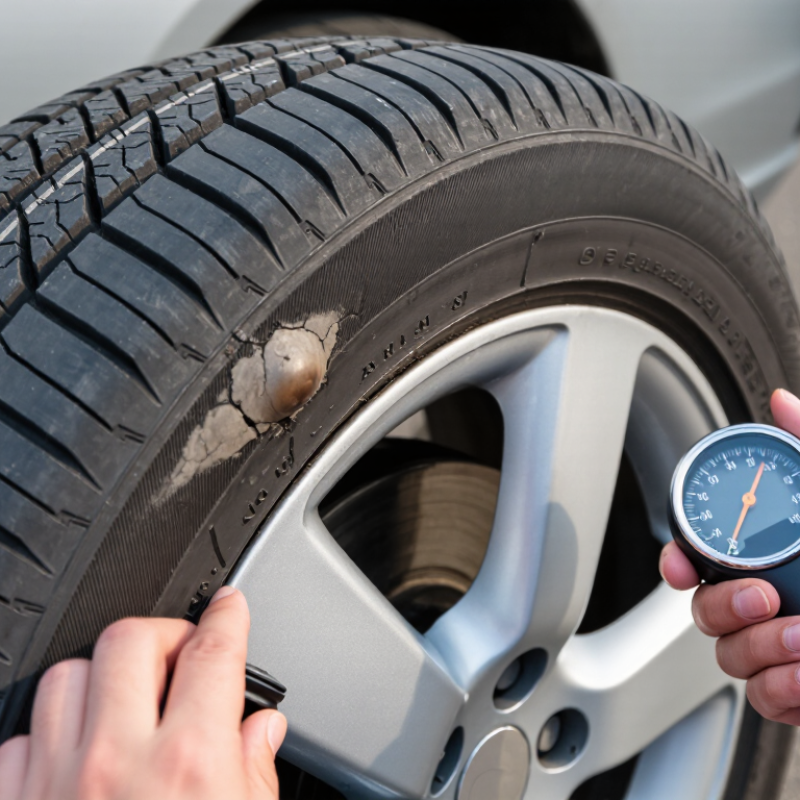
Look for uneven tread wear, exposed cords, cuts, cracks, and sidewall bulges. A bulge usually signals damaged internal cords, even when the tread looks acceptable. Tread depth also matters. The U.S. Tire Manufacturers Association recommends replacing tires when tread reaches 2/32 of an inch. Check pressure when tires are cold, using the vehicle placard rather than the tire’s maximum rating. A dashboard warning helps, but it does not identify every defect. I once noticed shoulder wear only after turning the wheel fully. My first glance missed it. That mistake is worth remembering. A slow leak, vibration, or repeated pressure loss deserves inspection by a qualified tire professional, not repeated inflation alone.
Tire problems can reduce traction, increase stopping distance, and raise the risk of a blowout. Tread depth is one of the easiest warning signs to check.
Check all tires when cold at least once a month and before long trips. Use the vehicle placard pressure, not the maximum pressure printed on the tire.
Wear concentrated on one edge or in patches may indicate incorrect inflation, poor alignment, or suspension problems.
Cuts, cracks, exposed cords, or sidewall bulges require prompt professional inspection and may require tire replacement.
Tread-depth values are shown in 32nds of an inch. New passenger-car tires commonly measure about 10–11/32 inch. Around 4/32 inch is a useful wet-weather replacement planning point, while 2/32 inch is the commonly recognized U.S. legal minimum and tread-wear indicator level; local laws may differ.
Uneven tread wear often reveals a problem before a tire visibly fails. The inner edge may wear faster than the center. The outer shoulder may look smooth and rounded. A sawtooth pattern can feel rough when you move your hand across the tread.
Underinflation commonly wears both shoulders. Overinflation usually wears the center rib. Incorrect wheel alignment can rapidly damage one inner or outer edge. Worn suspension parts may create cupping, with repeating dips around the tire. Rotation problems can also cause irregular wear, especially on vehicles carrying uneven loads. NHTSA’s TireWise guidance states that tires can lose about 1 psi monthly. Cold temperatures can reduce pressure further. USTMA inspection guidance recommends checking inflation, tread condition, and visible damage regularly. These details matter because pressure changes can be difficult to notice while driving.
Tips: Check pressure when tires are cold, using the vehicle maker’s recommended setting. Inspect tread monthly, including the inside edge. Use a tread-depth gauge, not just a coin. Many safety professionals treat 2/32 inch as the replacement limit, but wet-road grip may decline earlier. Look for cracks, bulges, exposed cords, or nails. Do not ignore vibration or pulling. A technician should inspect alignment and suspension parts before installing new tires. I used to think even-looking tread meant a healthy tire. That assumption is unsafe. A quick glance is not a diagnosis.
| Tread-Wear Pattern | What It Looks or Feels Like | Most Likely Causes | How to Confirm It | Recommended Action | Priority |
|---|---|---|---|---|---|
| Wear on Both Shoulder Edges | The outer ribs on both sides of the tread are noticeably smoother than the center. Steering may feel less precise, especially during cornering. | Underinflation, repeated heavy loading, or extended driving with insufficient air pressure. | Check the pressure when the tires are cold and compare it with the vehicle manufacturer's recommended pressure listed on the driver's-door placard or owner's manual. | Inflate the tires to the recommended cold pressure. Inspect for punctures or air leaks, and have the tire checked if the shoulder wear is severe. | High |
| Wear in the Center of the Tread | The center rib is more worn than both shoulders. The tire may have reduced contact with the road over part of the tread. | Overinflation or incorrect pressure adjustment for the vehicle and load. | Measure pressure when cold and compare it with the vehicle manufacturer's specification. Do not use the maximum pressure molded on the sidewall as the normal operating target unless instructed by the vehicle manufacturer. | Correct the pressure gradually and inspect tread depth. Replace the tire if wear has reached the legal or manufacturer-recommended limit. | Medium |
| One-Sided Shoulder Wear | Only the inner or outer shoulder is worn faster than the rest of the tread. The vehicle may pull to one side or the steering wheel may not sit centered. | Wheel misalignment, worn suspension parts, bent components, or incorrect ride height. | Compare the same tire positions on both sides of the vehicle and look for irregular steering behavior. A professional alignment and suspension inspection is required for confirmation. | Arrange an alignment check and inspect steering and suspension components before fitting replacement tires. Continued driving can rapidly worsen the wear. | High |
| Feathered or Sawtooth Tread Blocks | Each tread block feels smooth in one direction and sharp in the other when a hand is moved lightly across the tread. | Toe misalignment, worn steering or suspension components, or incorrect alignment angles. | With the vehicle parked, carefully feel across the tread only after checking that there are no exposed cords or other hazards. Compare both sides of the tire. | Have the alignment and related steering components inspected. Rotate the tires only if permitted by the tire and vehicle requirements and if the wear is not already excessive. | High |
| Cupping or Scalloped Patches | A repeating series of dips or scooped-out sections appears around the tread. The tire may produce a rhythmic humming or drumming noise. | Worn shock absorbers or struts, wheel imbalance, wheel runout, loose suspension parts, or poor tire maintenance. | Inspect the tread visually and run a hand over it carefully. A technician should check wheel balance, suspension condition, and wheel runout. | Limit high-speed driving until the cause is checked. Repair worn components and correct balance or alignment problems before replacing or rotating tires. | High |
| Diagonal or Patchy Wear | Uneven diagonal bands or isolated worn patches appear across the tread, sometimes with vibration at certain speeds. | Wheel imbalance, alignment problems, irregular rotation, bent wheels, or suspension wear. | Inspect all four tires and note whether vibration changes with speed. A service center can check balance, alignment, wheel condition, and tire uniformity. | Schedule a complete tire and wheel inspection. Do not rely on rotation alone if vibration or structural damage is present. | Medium |
| Flat Spots | A localized section of the tread is significantly flatter than the surrounding area. Vibration may be strongest immediately after the vehicle has been parked. | Hard braking with locked wheels, prolonged parking, a dragging brake, or a tire that has lost structural integrity. | Look for a broad flat area and check whether vibration continues after several miles of normal driving. Inspect the braking system if the condition appeared suddenly. | Have the tire and brakes inspected. A tire with significant flat spotting, internal damage, or persistent vibration may need replacement. | High |
| Cracks, Bulges, or Exposed Cords | Sidewall cracks, tread separation, a bulge, blister, or visible reinforcing cords are present. | Impact damage, aging, underinflation-related flexing, overloading, curb strikes, or internal tire failure. | Perform a visual inspection of both sidewalls and the full tread. Never attempt to repair a sidewall bulge or exposed cord. | Stop using the tire and have it evaluated immediately. A bulged, severely cracked, separated, or cord-exposing tire generally requires replacement. | Immediate |
| Tread Wear Indicators Reached | The tread is level with the raised wear bars in the grooves, indicating that the remaining tread is at or near the commonly used minimum replacement threshold. | Normal service wear, neglected rotation, improper inflation, alignment faults, or aggressive driving. | Locate the wear bars in the main grooves and measure tread depth with a tread-depth gauge. Wet-weather performance can decline before the wear bars are fully reached. | Replace the tire when the wear indicators are flush with the tread or when damage, age, or uneven wear makes the tire unsuitable. Check local requirements because minimum limits vary by jurisdiction. | High |
| Different Wear Rates Across the Vehicle | One axle or one tire wears substantially faster than the others, even though the tires were installed at a similar time. | Different inflation pressures, alignment differences, drivetrain layout, suspension wear, loading patterns, or infrequent rotation. | Record tread-depth measurements at several points on every tire and compare pressures, positions, and service history. | Correct pressure differences, follow the vehicle's rotation schedule when applicable, and investigate alignment or suspension issues before installing new tires. | Medium |
How to Spot Common Tire Problems Every Driver Should Know
Low pressure often develops quietly. The tire may look normal while losing grip and wearing its shoulders. Check all four tires with a reliable gauge when they are cold. Use the pressure listed on the vehicle’s door label, not the maximum number molded into the sidewall. The U.S. Department of Energy estimates that each 1-psi loss across all tires can reduce fuel economy by about 0.2%. That sounds small, but repeated neglect adds up. A dashboard warning is useful, not perfect.
Leaks need closer attention. Mark the valve stem and tread with soapy water, then watch for growing bubbles. A screw, nail, cracked sidewall, or damaged rim can release air slowly. NHTSA reports nearly 11,000 tire-related crashes each year in the United States, so a “small” leak deserves respect. I once ignored a weekly pressure loss because the tire still looked firm. That was careless. Recheck the pressure after several hours, rather than guessing from appearance.
Valve damage is easier to miss. Look for a bent stem, loose cap, corrosion, or bubbles around the valve base. Pressing the stem sideways can reveal movement, but do not force it. A trained technician should inspect persistent leaks, uneven wear, or sidewall damage. The Rubber Manufacturers Association recommends monthly pressure checks, yet many drivers inspect only before long trips. That habit leaves too much room for error.
How to Spot Common Tire Problems Every Driver Should Know
Tire cracks often appear as fine lines along the sidewall or between tread blocks. They may result from age, sunlight, low pressure, or repeated heat exposure. During a cold-tire inspection, bend slightly and examine both sidewalls carefully. A shallow surface line still deserves monitoring. Deep cracks, exposed cords, or widespread cracking require professional assessment before driving.
A bulge looks like a small balloon pushing outward from the sidewall. It usually indicates damaged internal cords, often after hitting a pothole or curb. Do not press it repeatedly or continue driving on it. A puncture may leave a visible nail, screw, or sharp object, but some leaks are hidden. I once missed a slow leak because the tire looked normal. A pressure check would have caught it earlier. If pressure drops quickly, stop safely and avoid steering sharply. A qualified tire technician should inspect the casing and repairability.
Tips: Check pressure with a reliable gauge when tires are cold. Walk around the vehicle before longer trips. Look for cuts, uneven wear, trapped objects, and missing valve caps. Never remove a nail before professional inspection, since it may be slowing the leak. Use a temporary spare only as instructed, and drive gently. Small warning signs can become serious quickly.
Tire problems rarely announce themselves clearly. A slow pressure loss may feel like a soft steering response or increased road noise. Check pressure when tires are cold, using the vehicle placard rather than the sidewall maximum. Inspect the tread for nails, cuts, cracks, and exposed cords. I once ignored uneven wear because the car still drove normally. That was careless.
A puncture in the central tread may be repairable after a professional inspection. Repairs are unsuitable for sidewall damage, large holes, or separated rubber. Replace a tire with a bulge, deep sidewall cut, or visible internal material. If tread reaches the wear bars, replacement should not wait. Replace tires in axle pairs when appropriate, and follow the vehicle’s service guidance.
Professional tire service becomes important when vibration, pulling, repeated pressure loss, or unusual wear continues. These signs may involve alignment, suspension parts, or internal tire damage. Do not keep driving on a tire with a growing bulge. If pressure drops rapidly, stop safely and use the spare if available. Then arrange an inspection. A repair may save a usable tire, but replacement is safer when damage affects its structure. Even experienced drivers can miss hidden damage, especially after a pothole strike.
The inner edge may wear faster than the center. The outer shoulder can look rounded and smooth. A sawtooth pattern feels rough under your hand. A quick glance can mislead you.
Underinflation commonly wears both shoulders. Check pressure when the tires are cold. Use the setting on the vehicle’s door label. Do not rely on appearance alone.
Overinflation often wears the center rib. The tire may still look acceptable from a distance. A reliable gauge gives better evidence. Small pressure errors matter.
Incorrect wheel alignment can damage one edge quickly. Worn suspension parts may worsen the pattern. Pulling or vibration adds another warning. Have these parts inspected before fitting replacement tires.
Check all tires with a reliable gauge when cold. Mark the valve and tread with soapy water. Growing bubbles may reveal escaping air. A nail, cracked sidewall, or damaged rim can leak slowly.
Look for a bent stem, loose cap, or corrosion. Bubbles around the valve base deserve attention. Gentle movement may reveal a loose stem. Do not force it.
Fine cracks may appear on sidewalls or between tread blocks. A bulge looks like a small balloon pushing outward. It may indicate damaged internal cords. Do not press it repeatedly or continue driving on it.
Keep the object in place until a technician examines it. Removing a nail may increase air loss. If pressure drops quickly, stop safely. Avoid sharp steering movements. Looks can deceive.
Common Tire Problems Every Driver Should Know can affect safety, handling, fuel efficiency, and overall driving comfort. Uneven tread wear may signal improper inflation, poor wheel alignment, worn suspension parts, or incorrect tire rotation. Drivers should regularly inspect tread depth and look for differences between the inner, center, and outer sections of the tire. Low pressure can reduce control and cause excess heat, while repeated pressure loss may indicate a puncture, air leak, or damaged valve. Checking tire pressure regularly and examining the valve area can help identify these issues early.
Cracks, bulges, and punctures are also important warning signs. Cracks may result from aging or environmental exposure, while bulges often indicate internal structural damage and require immediate attention. Small punctures may sometimes be professionally repaired, but damage near the sidewall or large tears usually require replacement. Drivers should seek professional tire service whenever damage is uncertain, pressure keeps dropping, or the tire shows serious wear. Knowing when to repair, replace, or stop driving can prevent more dangerous failures.
