 DUS Auto Parts
DUS Auto Parts
DUS Auto Parts
Mountain roads can turn a calm drive into a demanding test of judgment. Sharp bends, loose gravel, steep drops, and sudden weather changes leave little room for careless decisions. A road that looks dry near the valley may become icy around the next shaded corner. This guide to Driving Safety Tips For Mountain Roads explains how to prepare, control speed, and respond to changing conditions without relying on luck.
Dr. David Strayer, a respected traffic-safety researcher, has said, “Driving is a visual task.” That simple observation matters on mountain routes. Drivers must scan far ahead, check mirrors, read warning signs, and notice cyclists or animals near the shoulder. Looking only at the pavement directly ahead can create a dangerous surprise. Your hands should remain steady, while your attention stays outside the vehicle.
Before climbing, inspect the tires, brakes, lights, coolant, and fuel level. Use a lower gear before a long descent, rather than waiting until the brakes feel hot. Keep extra distance from vehicles ahead. Mistakes happen quickly here. Even experienced drivers can enter a bend too fast, especially after hours of travel. I have found that slowing earlier feels overly cautious at first, but it creates more options when visibility suddenly disappears. Never assume a familiar route will behave the same way twice. Rain, fog, fallen rocks, and wildlife can change the entire drive within minutes. These practical Driving Safety Tips For Mountain Roads focus on preparation, patience, and honest self-assessment. Safety sometimes means admitting that conditions are beyond your comfort level and choosing to stop.
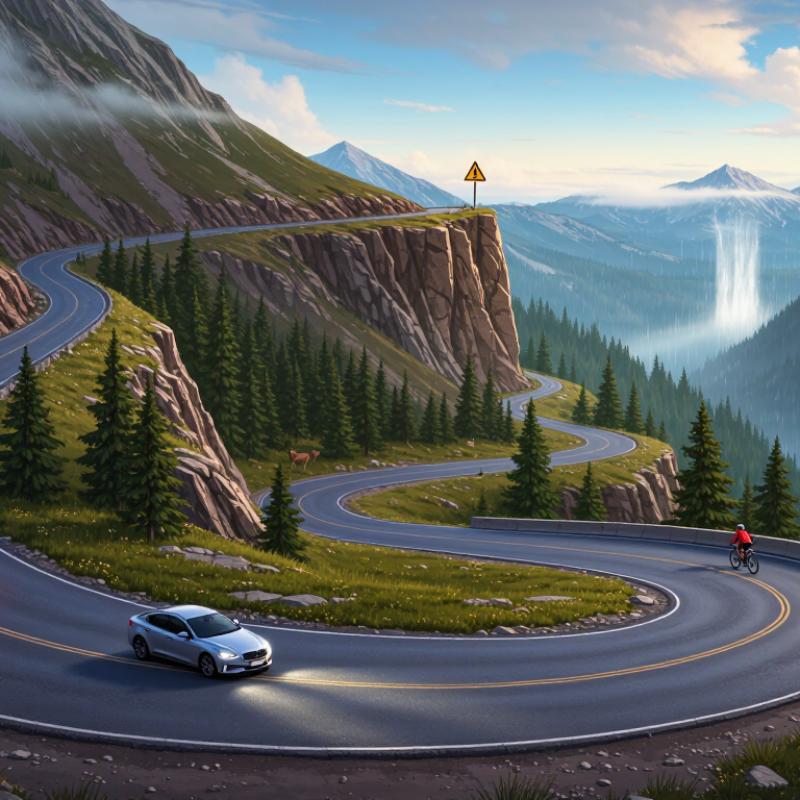
Mountain roads create hazards that ordinary driving habits often underestimate. Blind bends can hide oncoming vehicles, cyclists, animals, or fallen rocks. Steep grades also increase stopping distance and brake temperature. Visibility can collapse. Fog may arrive within minutes, even under a clear morning sky. The World Health Organization’s Global Status Report on Road Safety 2023 estimates 1.19 million annual road deaths worldwide, reminding drivers that small errors can have severe consequences.
Tips: Reduce speed before each curve, not halfway through it. Keep both hands steady and stay within your lane. Use a lower gear on long descents, rather than riding the brakes. Leave extra space behind motorcycles and trucks. Check mirrors before entering narrow sections. I once trusted a bright sky too quickly; that judgment was poor. Mountain weather changes faster than confidence.
The Federal Highway Administration advises drivers to follow warning signs, respect advisory speeds, and prepare for restricted sight distances. NHTSA’s Traffic Safety Facts 2022 recorded 12,151 speeding-related deaths in the United States, representing 29% of all traffic fatalities. Speed becomes especially unforgiving beside cliffs or loose gravel. Watch for dark patches, wet leaves, ice, and stones near the shoulder. If rockfall blocks part of the lane, slow gradually and stop only where approaching drivers can see you. Check your route, fuel, tire condition, and weather before climbing.
| Mountain Road Hazard | Why It Is Dangerous | Typical Risk Level | Safe Driving Action | Warning Signs to Watch For |
|---|---|---|---|---|
| Sharp bends and hairpin turns | Limited sight distance can hide approaching vehicles, cyclists, pedestrians, animals, or obstacles. | High | Reduce speed before the bend, stay in your lane, keep both hands on the steering wheel, and avoid overtaking. | Chevron signs, curve warning signs, reduced visibility, tire marks, and roadside mirrors. |
| Steep uphill and downhill grades | Long slopes can reduce vehicle control, increase braking distance, and cause brakes to overheat. | High | Use a suitable lower gear before descending, maintain a safe following distance, and brake smoothly rather than continuously. | Steep-grade signs, escape ramps, runaway-truck areas, and repeated brake-warning signs. |
| Loose gravel and fallen rocks | Debris can reduce tire grip, damage tires, or become a sudden obstacle that requires evasive action. | High | Slow down gradually, avoid sudden steering or braking, increase space from other vehicles, and never stop beneath unstable slopes. | Rockfall signs, wire mesh, retaining walls, fresh debris, cracked slopes, and construction activity. |
| Narrow lanes and limited shoulders | There may be little room to recover from a mistake or pass an oncoming vehicle safely. | High | Keep to the correct side, reduce speed when meeting traffic, and use designated passing areas only. | Single-lane sections, narrow bridges, unprotected edges, and missing or minimal shoulders. |
| Cliffs, drop-offs, and inadequate barriers | A small loss of control can result in severe consequences, especially where guardrails are absent or damaged. | High | Drive well below the point at which the vehicle feels difficult to control, avoid distractions, and keep a generous margin from the edge. | Guardrail gaps, steep drop-offs, edge posts, exposed slopes, and abrupt road-edge markings. |
| Fog, low cloud, and sudden visibility changes | Reduced visibility makes it harder to identify curves, lane boundaries, hazards, and oncoming traffic. | High | Use low-beam headlights, slow to a speed that allows stopping within visible distance, and avoid using high beams in fog. | Rapidly changing weather, moisture on the road, cloud banks, and reduced visibility ahead. |
| Snow, ice, and frost | Traction can decrease sharply, particularly on shaded sections, bridges, and high elevations. | High | Check conditions before departure, increase following distance, make gentle inputs, and use approved traction equipment when required. | Freezing temperatures, snow poles, shaded pavement, icy patches, and winter road advisories. |
| Rain and water runoff | Water can reduce grip, hide potholes, trigger surface flooding, and increase the risk of skidding or hydroplaning. | Medium | Reduce speed, increase the gap to the vehicle ahead, avoid standing water, and do not cross moving water unless the route is confirmed safe. | Heavy rainfall, streams crossing the road, mud, puddles, blocked drains, and fresh washouts. |
| Wildlife and livestock | Animals may enter the roadway unexpectedly, particularly near forests, grazing areas, and water sources. | Medium | Scan both road edges, slow down near animal-warning signs, and expect additional animals after seeing one. | Wildlife fencing, grazing land, animal tracks, warning signs, and animals near the shoulder. |
| Two-way traffic on one-lane sections | Vehicles may meet with insufficient room, especially near bends, tunnels, or bridges. | High | Approach slowly, sound the horn where appropriate, yield according to local rules, and use a safe turnout instead of reversing long distances. | Priority signs, passing bays, one-lane bridge signs, tunnels, and obstructed sight lines. |
| Overheated brakes | Repeated heavy braking on long descents can reduce braking effectiveness and increase stopping distance. | High | Select a lower gear before the descent, use controlled intermittent braking, and stop in a safe location if a burning smell or fading brake response occurs. | Burning odor, smoke, soft brake pedal, reduced braking response, or brake-temperature warnings. |
| Altitude and driver fatigue | Long, demanding routes can cause tiredness, slower reactions, and reduced concentration; altitude may also affect some travelers. | Medium | Take regular breaks, stay hydrated, avoid driving when drowsy, and share driving where possible. | Frequent yawning, missed signs, wandering within the lane, delayed reactions, and headache or dizziness. |
| Tunnels and sudden light changes | Visibility can change quickly, and lane space may be restricted inside tunnels. | Medium | Turn on headlights before entering, remove sunglasses if necessary, maintain lane position, and do not stop except for an emergency. | Tunnel entrances, lighting changes, ventilation systems, emergency bays, and lane-control signs. |
| Road damage and construction zones | Potholes, uneven surfaces, temporary lanes, and workers can make the roadway unpredictable. | Medium | Follow temporary signs and flaggers, slow down early, maintain extra space, and avoid abrupt lane changes. | Cones, barriers, temporary signals, uneven-road signs, machinery, and exposed road surfaces. |
| Limited mobile coverage and roadside assistance | A breakdown or collision may take longer to report or receive help in remote areas. | Medium | Check the route and weather, keep fuel and essential supplies available, tell someone your travel plan, and remain with the vehicle if it is safer. | Remote stretches, emergency-phone signs, long distances between settlements, and limited service indicators. |
General rule: Drive at a speed that allows you to stop within the distance you can see to be clear, and always follow posted limits, road signs, weather warnings, and local traffic regulations.
Blind bends can hide vehicles, cyclists, animals, or fallen rocks. Steep slopes also increase stopping distance and brake heat. Visibility may vanish within minutes.
Reduce speed before entering the curve. Stay within your lane and keep both hands steady. Choose a speed that allows stopping within visible road space.
Select a lower gear before the slope becomes steep. Engine braking helps control speed and reduces brake heat. Do not rely only on constant braking.
Watch for pale stones gathered beside the pavement. Leave space from the edge and avoid sudden steering corrections. Gravel can make steering feel vague.
Slow down smoothly and increase following distance. Use appropriate lights and watch road edges carefully. A clear morning does not guarantee clear mountain weather.
Slow down and find a stable pull-off when possible. Do not force another vehicle toward an unprotected edge. Communicate calmly with clear signals.
Check the route, fuel level, tire condition, and weather forecast. Inspect warning signs and restricted-view areas. I sometimes trusted bright skies too quickly.
Stop safely where other drivers can see you. Let the brakes cool and check whether the pedal feels soft. Reaching the viewpoint can wait.
Leave more space than usual, especially near bends and steep descents. Larger vehicles can block your view. Extra distance gives you more reaction time.
Speed can turn a small mistake into a serious problem. A few extra minutes may prevent a rushed maneuver. Confidence is not always good judgment.
Mountain roads present unique challenges, including steep grades, narrow lanes, sharp bends, loose gravel, changing weather, and limited visibility. Effective Driving Safety Tips For Mountain Roads begin with preparing the vehicle, checking essential systems, carrying suitable emergency supplies, and planning a route that accounts for elevation, road conditions, and rest opportunities. Drivers should remain alert, keep both hands available for steering, and avoid distractions throughout the journey.
On steep or narrow roads, reduce speed and maintain a safe position without crossing the center line. Approach curves cautiously, using a speed that allows you to stop within the visible distance. Descend gradually with controlled braking and appropriate gearing rather than relying constantly on the brakes. Rain, fog, snow, and darkness require even greater caution and increased following distance. If an unexpected obstacle, mechanical problem, or sudden weather change occurs, stay calm, pull over only where it is safe, make the vehicle visible, and wait for conditions to improve or assistance to arrive.
